


The Key Takeaways: > Turkey neck exercises won’t reverse skin aging on their own, but the muscle underneath the skin, the platysma, responds to training the way any other muscle does, and a toned platysma is part of what held a younger neck’s silhouette taut in the first place. Neck skin ages faster and more visibly than facial skin because it’s thinner and produces less oil, which is why “kept its shape” is really a muscle-and-skin story, not a skin-only one. Bejoyland NECKY trains the muscles behind that shape, including the platysma specifically, through adjustable resistance.
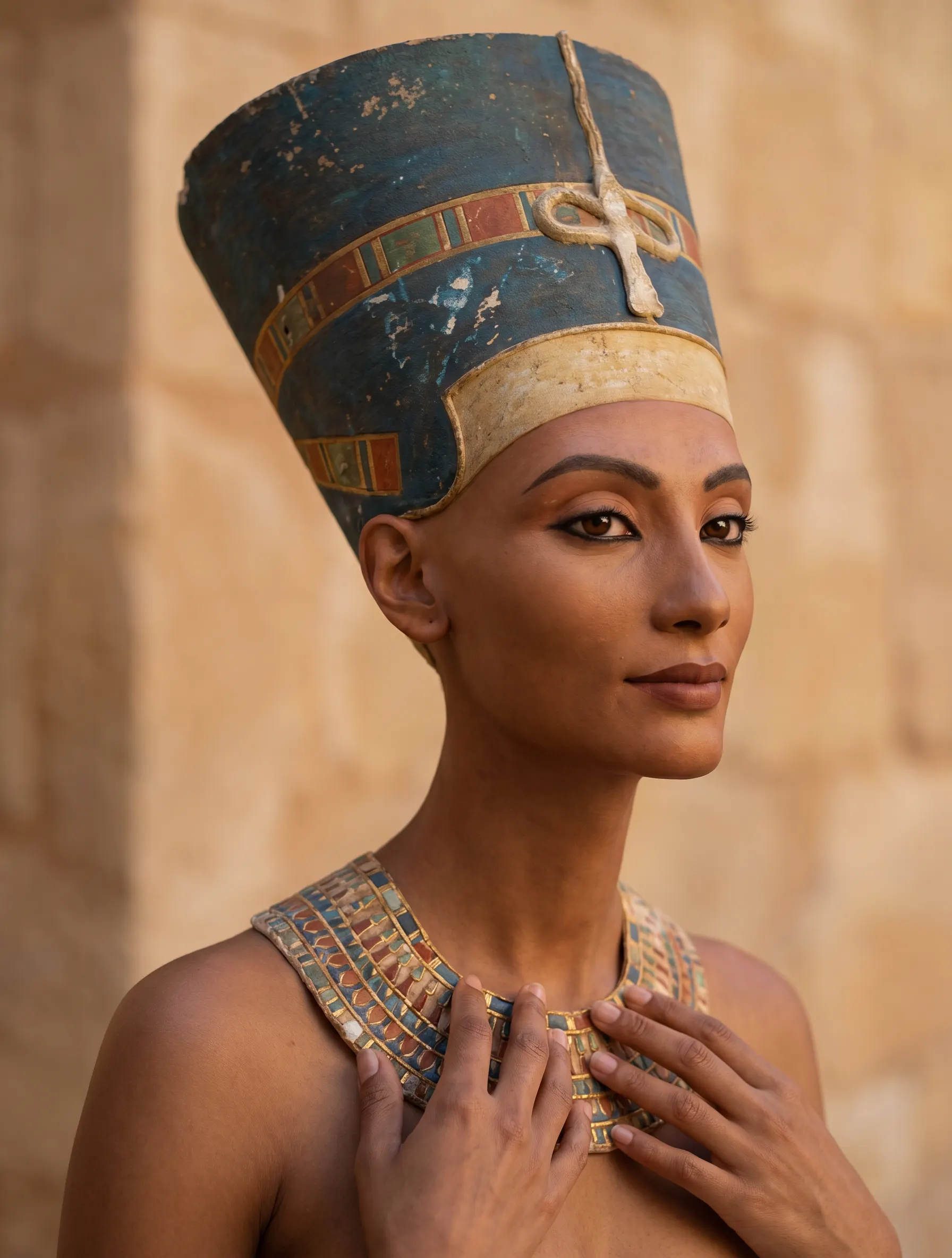
A defined jaw-to-neck line and smooth skin along it are what most people mean when they picture a graceful neck, the kind carved into Nefertiti’s bust three thousand years ago. What changes it over time is not one thing failing, it’s skin, muscle, and posture drifting out of sync with each other.
In This Article:
- What causes a “turkey neck” as you age?
- What are platysmal bands and horizontal neck lines?
- Why doesn’t a firming cream fix sagging neck skin?
- How does muscle tone affect the appearance of neck skin?
- Can turkey neck exercises really improve the look of an aging neck?
- How does Bejoyland NECKY train the muscles behind neck appearance?
- How do you build a safe neck-firming exercise routine?
- FAQ
- Sources
What causes a “turkey neck” as you age?
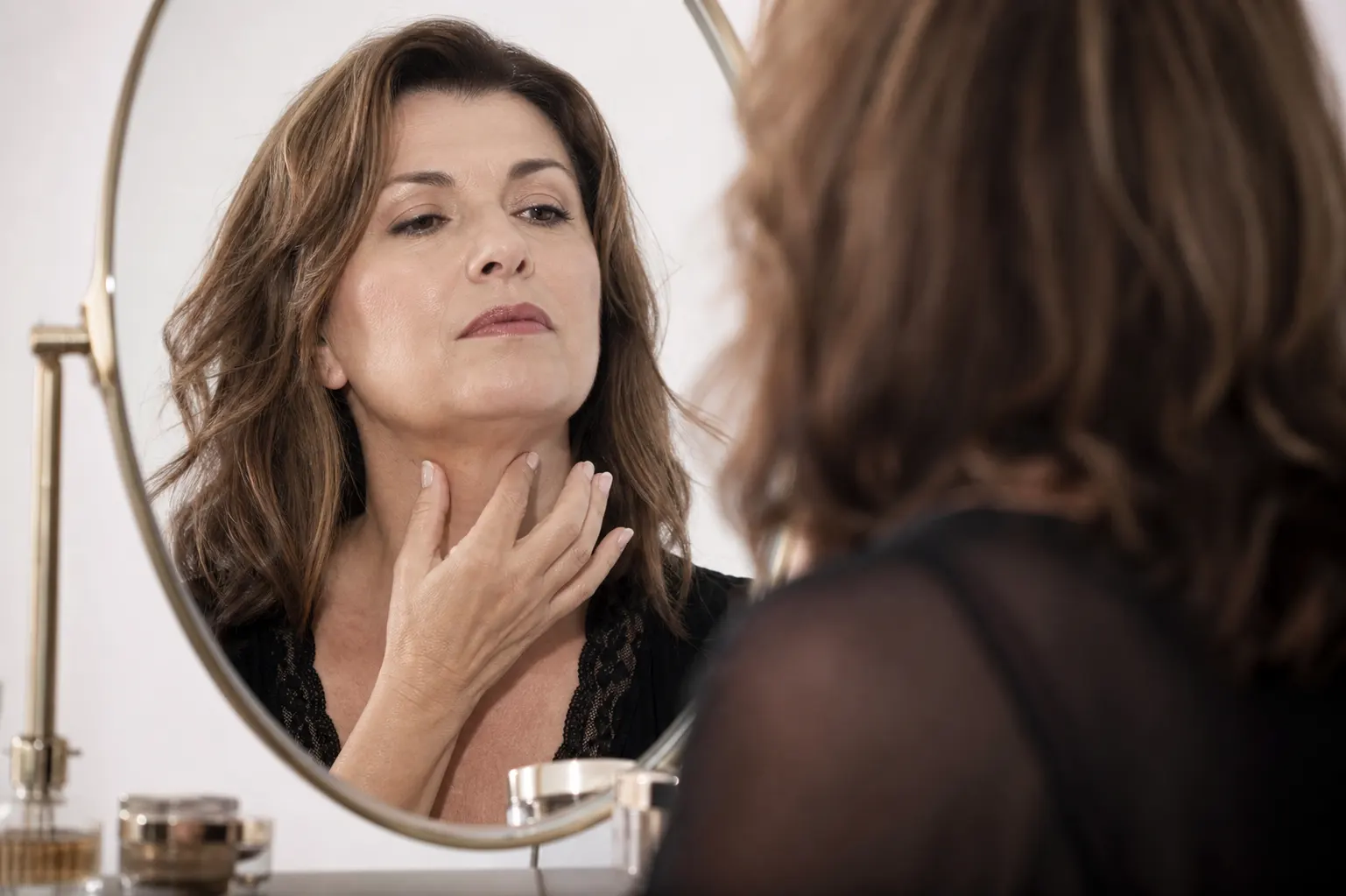
Neck skin ages differently from facial skin, and faster in some ways. It’s thinner, more extensible to allow for head movement, and produces less sebum, so it shows collagen loss and sagging more severely and earlier than the face does.2 Type I collagen, the structural protein that keeps skin taut, declines gradually with age and drops sharply with cumulative sun exposure, and its loss is what turns firm skin into skin that folds and sags.2
Underneath that skin, the platysma muscle sheet that runs from the jaw down to the collarbone loses tone the same way any unused muscle does. A “turkey neck” is usually this combination: thinner, less elastic skin with less muscular support underneath it, not a single cause with a single fix.
What are platysmal bands and horizontal neck lines?
Platysmal bands are the vertical cords that can appear down the front of the neck, most visible when the jaw clenches or the neck strains. They form where the platysma’s two sides separate from the midline over time, a change that becomes more visible as the muscle and the skin covering it both lose tautness.
Horizontal neck lines, sometimes called “necklace lines,” are a separate, skin-level change: creases that form perpendicular to the platysma’s fibers as skin loses elasticity and repeatedly folds in the same places. The two often show up together but come from different layers, one from the muscle beneath the skin, one from the skin itself.
Why doesn’t a firming cream fix sagging neck skin?
Topical products work on the epidermis: they hydrate, and some ingredients modestly support surface collagen with months of consistent use. That’s a real effect, just a shallow one. Neither a cream nor a serum reaches the platysma underneath the skin, and a slack muscle doesn’t respond to anything applied on top of it. A cream can make the surface look smoother temporarily; it can’t do what a stronger, better-toned muscle underneath does for the structure holding that surface up.
How does muscle tone affect the appearance of neck skin?
The platysma sits directly under the neck’s skin, closer to it than almost any other skeletal muscle in the body is to the skin covering it. That proximity means the muscle’s condition shows through: a toned, firm platysma gives the skin over it more underlying support, the same way a toned muscle anywhere else changes how the skin over it sits and moves. A slack platysma leaves the skin above it with less structural backing, which is part of why looser skin and a weaker platysma tend to show up together rather than as two unrelated problems.

Can turkey neck exercises really improve the look of an aging neck?
Muscle physiology is well established: a skeletal muscle trained with progressive resistance gets firmer and more toned, and the platysma is a skeletal muscle like any other. What’s less settled is how much that translates into a visibly different neck silhouette on its own, since skin elasticity and fat distribution are separate factors that exercise doesn’t change. The honest answer is that turkey neck exercises address the muscle side of the equation directly and the skin side only indirectly, through better underlying support, not through any effect on the skin itself.
That’s a reason to set expectations around what training the platysma actually does, not a reason to skip it. A neck that has both a toned platysma and healthy skin habits is working with more of the available factors than one relying on skin care alone.
How does Bejoyland NECKY train the muscles behind neck appearance?
The Bejoyland NECKY trains the neck’s muscles with adjustable elastic resistance, including the platysma specifically through jaw-opening movements, the one exercise pattern that actually recruits it (see the companion article on platysma exercises for jawline definition for the full mechanism). The same harness also trains the deeper neck muscles that support posture and head position, which affects how the neck’s silhouette carries itself day to day, not just how any one muscle looks in isolation.
Unlike a passive wrap or a firming cream, the resistance is something the muscle has to work against, which is the input a muscle actually needs to change. And because the tension is adjustable in small steps, training can start light and build gradually, which matters for a muscle sitting this close to delicate skin.
How do you build a safe neck-firming exercise routine?
Consistency at a low, controlled resistance matters more here than lifting heavy.
- Start with the trainer’s lowest resistance setting and perform slow, controlled jaw-opening repetitions to engage the platysma directly.
- Add gentle neck range-of-motion work within a comfortable range to keep the surrounding muscles active alongside the platysma.
- Keep sessions short, a few minutes at a time, since this is a thin muscle group that responds to frequency more than to long sessions.
- Increase resistance in small increments only once the current level feels easy to control with good form.
- Pair training with basic skin care (sun protection, hydration) rather than expecting either muscle training or skin care alone to do the whole job.
Bejoyland NECKY and the exercises above are built for general fitness and muscle toning, not to diagnose, treat, or cure any medical or cosmetic condition, and they are not a substitute for a surgical procedure. If you have a pre-existing cervical-spine condition or a jaw joint (TMJ) disorder, talk to a healthcare provider before starting a new neck-training routine.
FAQ
What is a "turkey neck" and what causes it?
It’s the common name for loose, sagging skin under the chin and along the neck. It usually comes from a combination of collagen loss in the skin, which ages faster on the neck than on the face, and a platysma muscle that has gone untoned over time.
Do turkey neck exercises help with crepey or sagging neck skin?
They tone the platysma underneath the skin, which gives it more structural support, but they don’t change the skin’s own elasticity or collagen content. Exercise addresses the muscle side of an aging neck, not the skin side, so it works best alongside basic skin care rather than as a replacement for it.
What's the difference between platysmal bands and ordinary aging wrinkles?
Platysmal bands are vertical cords from the platysma muscle separating at the midline, most visible when the jaw clenches. Horizontal neck lines, sometimes called necklace lines, are skin-level creases from lost elasticity. They often appear together but come from different layers, muscle versus skin.
Is a resistance trainer a non-surgical option worth trying before a neck lift?
It’s worth trying as a muscle-toning step, since it addresses the platysma directly at a fraction of the cost and no downtime. It isn’t a substitute for a surgical procedure, and it won’t change the skin’s own elasticity, so it’s best thought of as one factor to address, not a guaranteed alternative.
How often should you train your neck for visible muscle tone?
Short, consistent sessions most days of the week generally work better for a thin, small muscle group like the platysma than infrequent long sessions. Consistency at low, controlled resistance matters more than the amount of resistance used in any single session.
Is neck training safe for older adults?
Adjustable, low-starting resistance makes it accessible for most older adults, since the load can begin at the lowest setting and increase gradually. Anyone with a pre-existing cervical-spine condition or a jaw joint disorder should check with a healthcare provider before starting.
Sources
- Gudmundsson S, Woodson G. Anatomy, Head and Neck, Platysma Muscle. StatPearls, StatPearls Publishing. NCBI Bookshelf.
- Roberts WE, et al. Neck Aging and Rejuvenation: A Balanced Approach to Assessment and Treatment. Dermatological Reviews, 2024. Wiley Online Library.