

The Key Takeaways: If you’re weighing an Iron Neck alternative, the difference that matters most is direction of pull: clinical research shows that pulling the head sideways or forward (the way 360-degree halo trainers work) multiplies the load into spinal compression roughly 14-fold. Bejoyland NECKY applies its traction along the cervical spine’s own axis instead, so that multiplication largely doesn’t happen, and it carries eleven more design advantages built on the same principle.
You can claim you make the best neck trainer on the market. Anyone can say that. What matters is whether the claim holds up once you look at how the device is actually built, and what happens to your spine while you use it.
Bejoyland NECKY was designed around one mechanical difference from nearly every other neck trainer, harness, or resistance band on the market: the direction the pulling force travels relative to your spine. That single choice cascades into eleven more advantages below, all backed by the same design logic, not marketing copy.
12 advantages of the Bejoyland NECKY neck trainer
Each advantage below follows from Bejoyland NECKY’s core design choice: traction aligned with the cervical spine’s own axis, not across it.
1. It doesn’t multiply spinal compression while you train
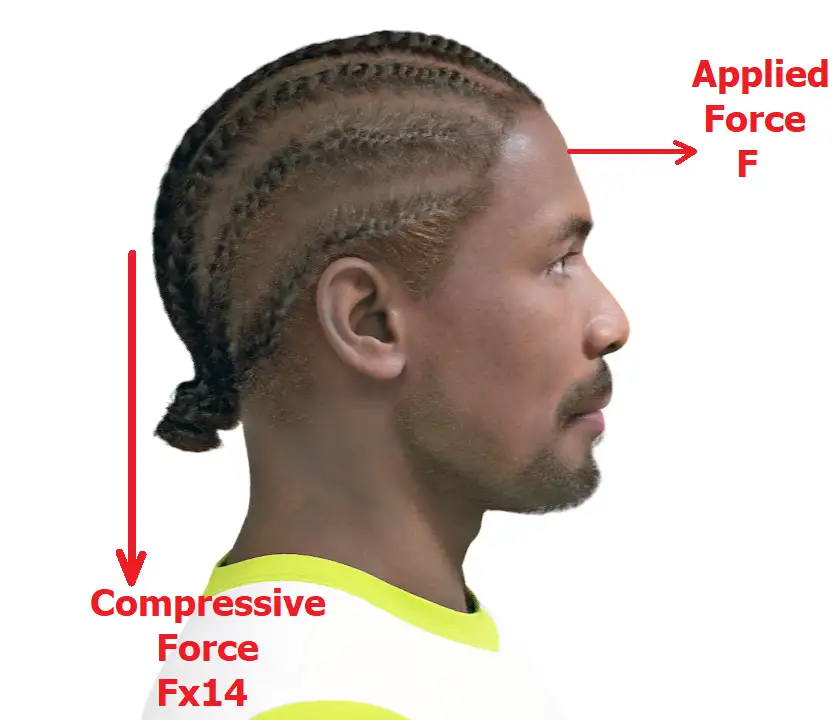
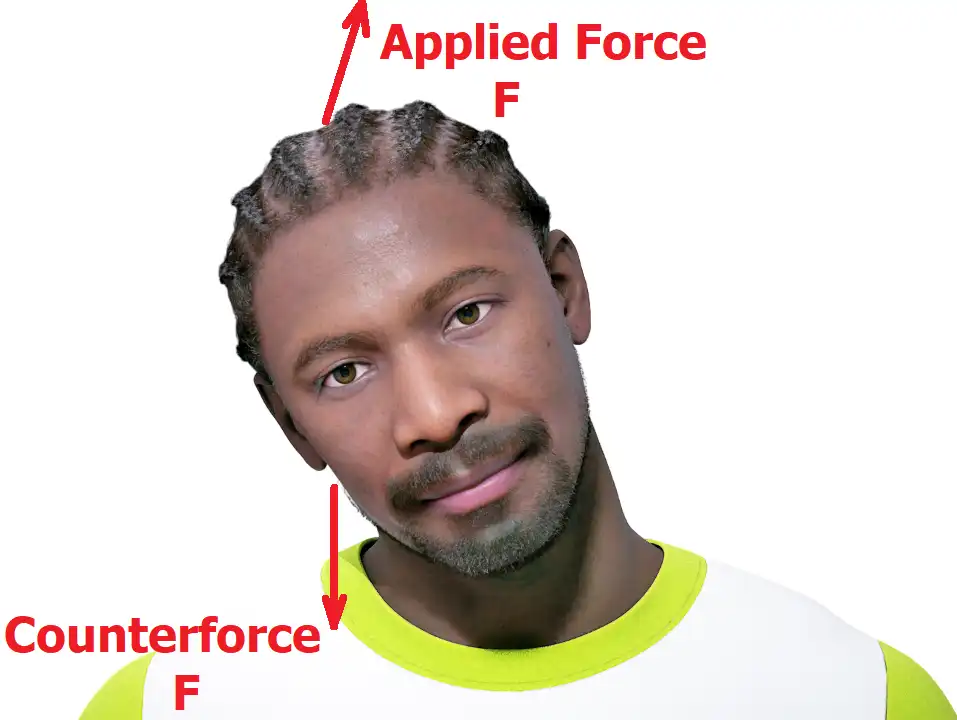
On a typical neck trainer, resistance pulls your head toward one of four directions: forward, back, or to either side. Your neck muscles resist that pull, but because those muscles run close to, and nearly parallel with, the spine, they work like the guy-wires anchoring a mast. To keep a mast from toppling sideways, a near-parallel wire needs very high tension, and that tension shows up as compression pressing straight down the mast. Your neck muscles do the same thing to your cervical spine whenever the pulling force comes from the side or from in front. On top of that, any load on the neck activates practically every muscle around it at once, both the ones doing the pulling and their opposing pairs, adding a further layer of compression regardless of which device applies the load.
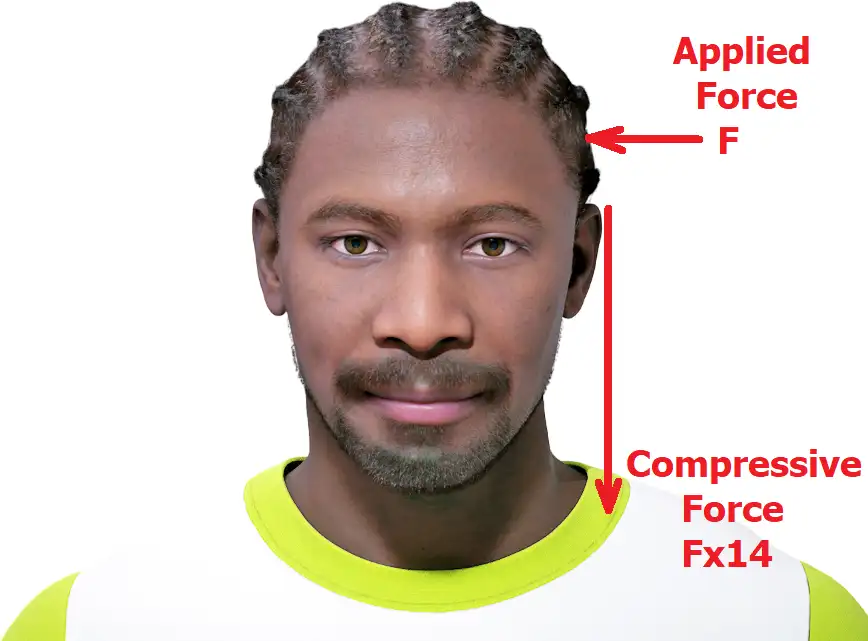
How large is that multiplication? A study of superficial and deep neck-muscle contributions under changing head postures found that lateral, off-axis loading produced spinal compression forces around 14 times the applied force.1 Pull the head sideways with 1 lb of force and the resulting compressive load on the spine can reach roughly 14 lbs, working against the exact relaxation a neck-training session is supposed to deliver.
Bejoyland NECKY’s elastic traction pulls along the cervical spine’s own axis instead of across it, in the same direction your neck muscles’ own resistance already runs. That removes the lever-disadvantage mechanism driving the 14-fold multiplication above; what’s left is only the smaller compressive force from ordinary muscle co-contraction, the same baseline effect any neck exercise produces, not an amplified one.
2. Gentle decompression instead of added load
An average adult head weighs about 11 lbs, and your cervical spine supports that load all day. Because Bejoyland NECKY’s traction pulls upward along the spine’s axis, it works against that everyday load instead of adding to it.
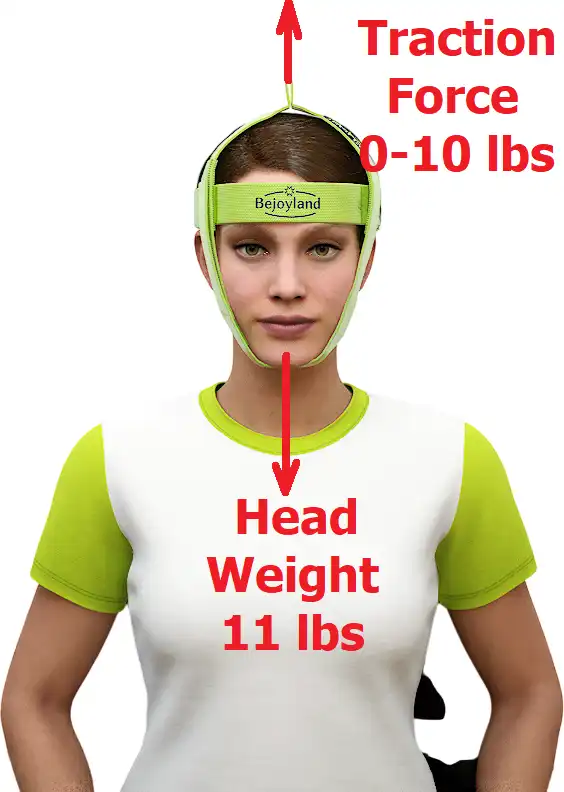
At the trainer’s maximum setting of 10 lbs, that upward pull comes close to offsetting the head’s own weight on the spine, supporting the kind of muscle relaxation that makes the rest of a training session more effective.
3. Two mounting options, whichever fits your space
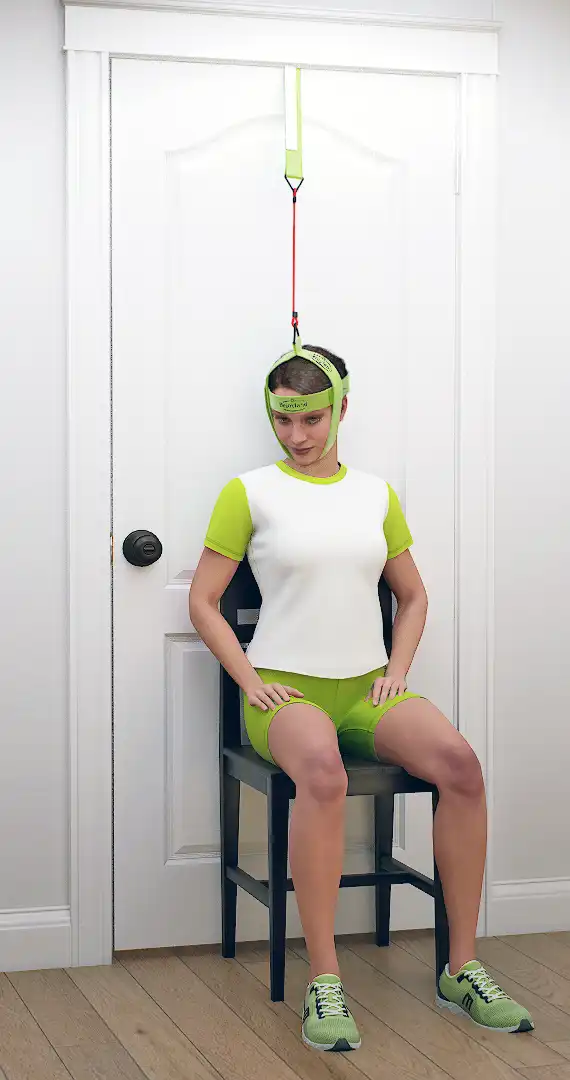
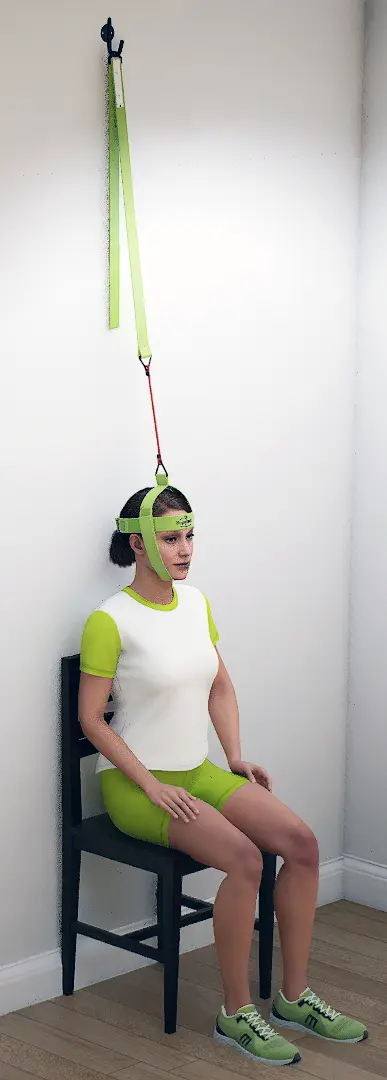
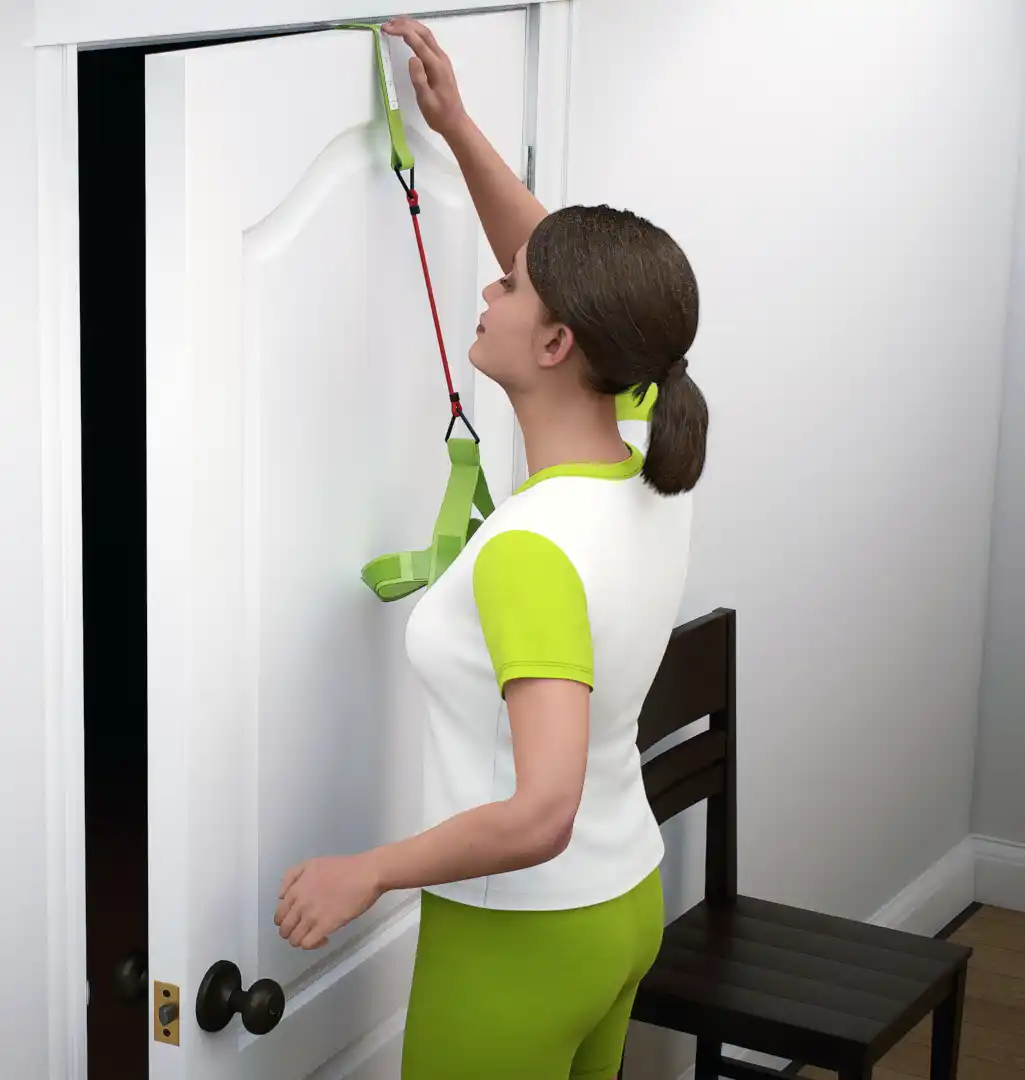
Bejoyland NECKY attaches two ways: clipped in a closed door, or hung from a hook screwed into a wall. Most people go with the door: it works the moment you close a door, with no shopping for a hook, no drilling, and no picking a fixed spot on a wall. A room without a door is hard to picture; a room without a wall you’re willing to drill into is common enough. The wall mount is there for anyone who wants a fixed, dedicated training spot instead.
At the trainer’s maximum setting of 10 lbs, that upward pull comes close to offsetting the head’s own weight on the spine, supporting the kind of muscle relaxation that makes the rest of a training session more effective.
4. Precise, repeatable resistance from 1 to 10 lbs
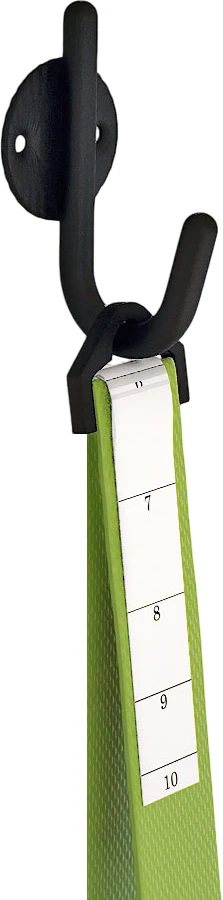
Dumbbells let you match a load to your strength level. A neck trainer needs the same thing. Bejoyland NECKY lets you set the elastic band’s resistance anywhere from 1 to 10 lbs, using a patented setup you run through once after purchase.
At the trainer’s maximum setting of 10 lbs, that upward pull comes close to offsetting the head’s own weight on the spine, supporting the kind of muscle relaxation that makes the rest of a training session more effective.
5. Your hands stay completely free
Bejoyland NECKY doesn’t require you to hold anything during a rep. That matters more than it sounds: shoulder-girdle movement contributes meaningfully to strengthening some neck muscles, and your hands also help control how much the superficial neck muscles activate while you’re working the deep neck flexors. Without that control, a session can reinforce the wrong movement pattern instead of the right one.
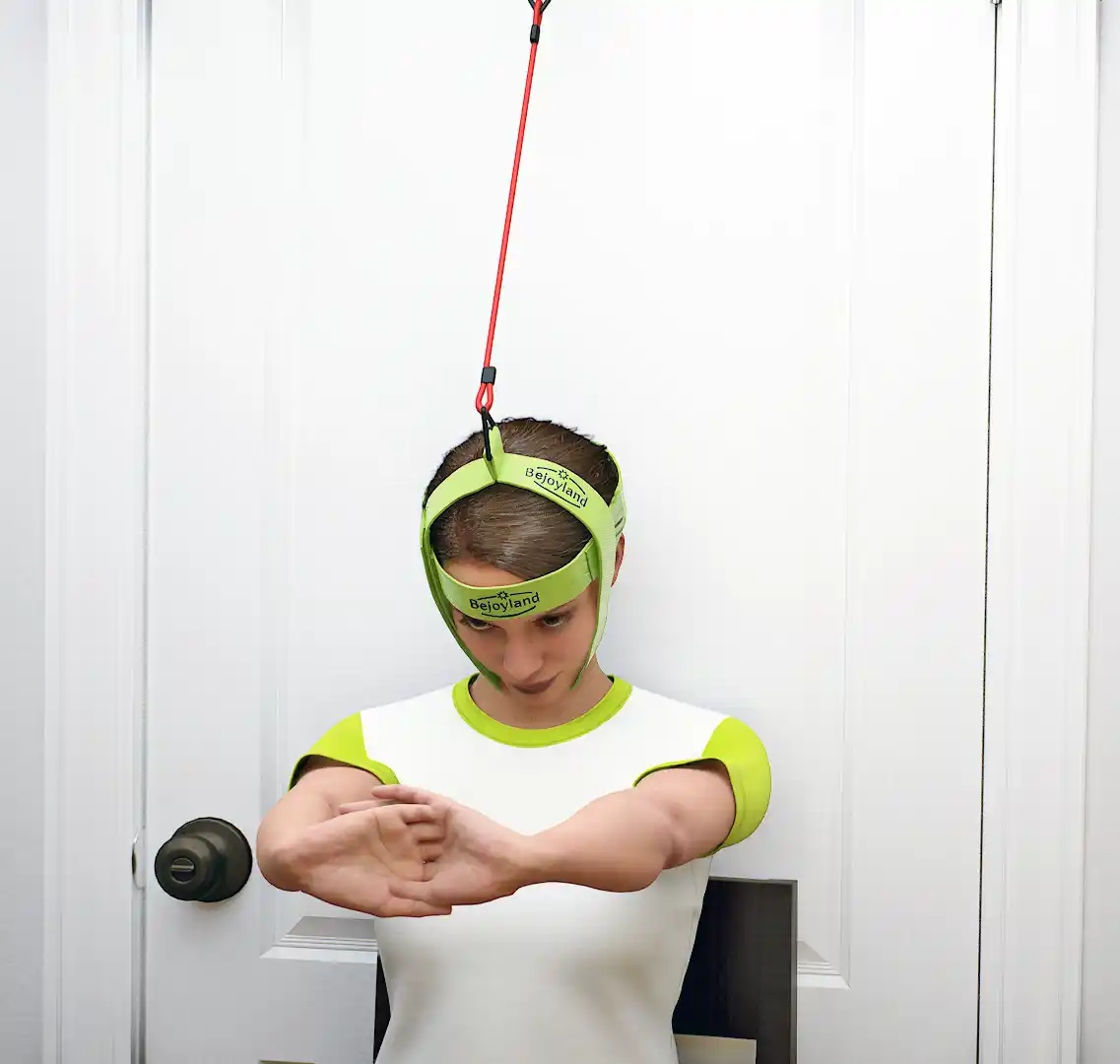
At the trainer’s maximum setting of 10 lbs, that upward pull comes close to offsetting the head’s own weight on the spine, supporting the kind of muscle relaxation that makes the rest of a training session more effective.
6. Built for PNF stretching, not just static holds
Bejoyland NECKY supports all three major stretching styles for the neck: static stretching, dynamic stretching, and PNF (contract-relax-antagonist-contract, or CRAC) stretching, one of the most effective stretching styles for increasing range of motion. Most neck trainers can’t do the third one. On a typical harness-and-band trainer, resistance comes from how far you’ve stepped away from the band’s anchor point: the pull’s direction and strength depend on your body’s position relative to that anchor, and easing it isn’t instant, you’d have to step closer and shorten the distance.
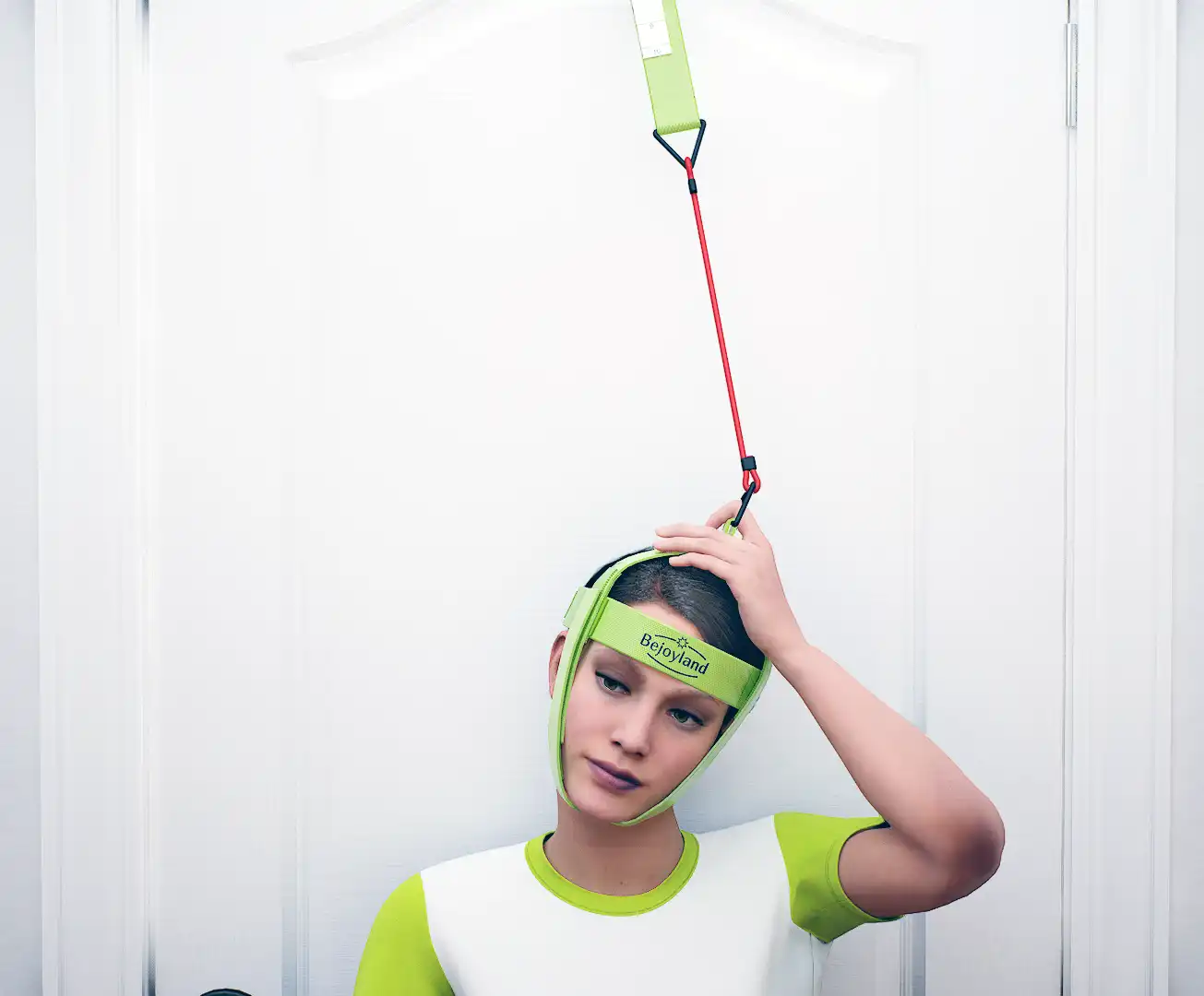
On Bejoyland NECKY, you hook a finger through the carabiner that connects the headgear to the elastic band and control the pull with your arm directly, moment to moment, instead of repositioning your whole body. That direct control is what makes a full PNF sequence practical. Here’s what one PNF stretch, increasing left lateral flexion range of motion, looks like:
- Hook a finger through the carabiner and use your arm to work against the band’s pull, tilting your head to the left to the end of your comfortable range of motion. Hold this static stretch for about 10 seconds.
- Contract the target muscle to try to straighten your head back toward neutral, while your arm holds its position and resists that movement. Hold this isometric contraction for about 6 seconds.
- Relax for about 3 seconds, with your arm still holding the band’s pull steady.
- Engage the antagonist muscles on the left side and work against the band’s pull to tilt your head further to the left. Hold for about 15 seconds.
- Let your arm assist the muscles in overcoming the band’s pull, deepening the stretch on the target muscle.
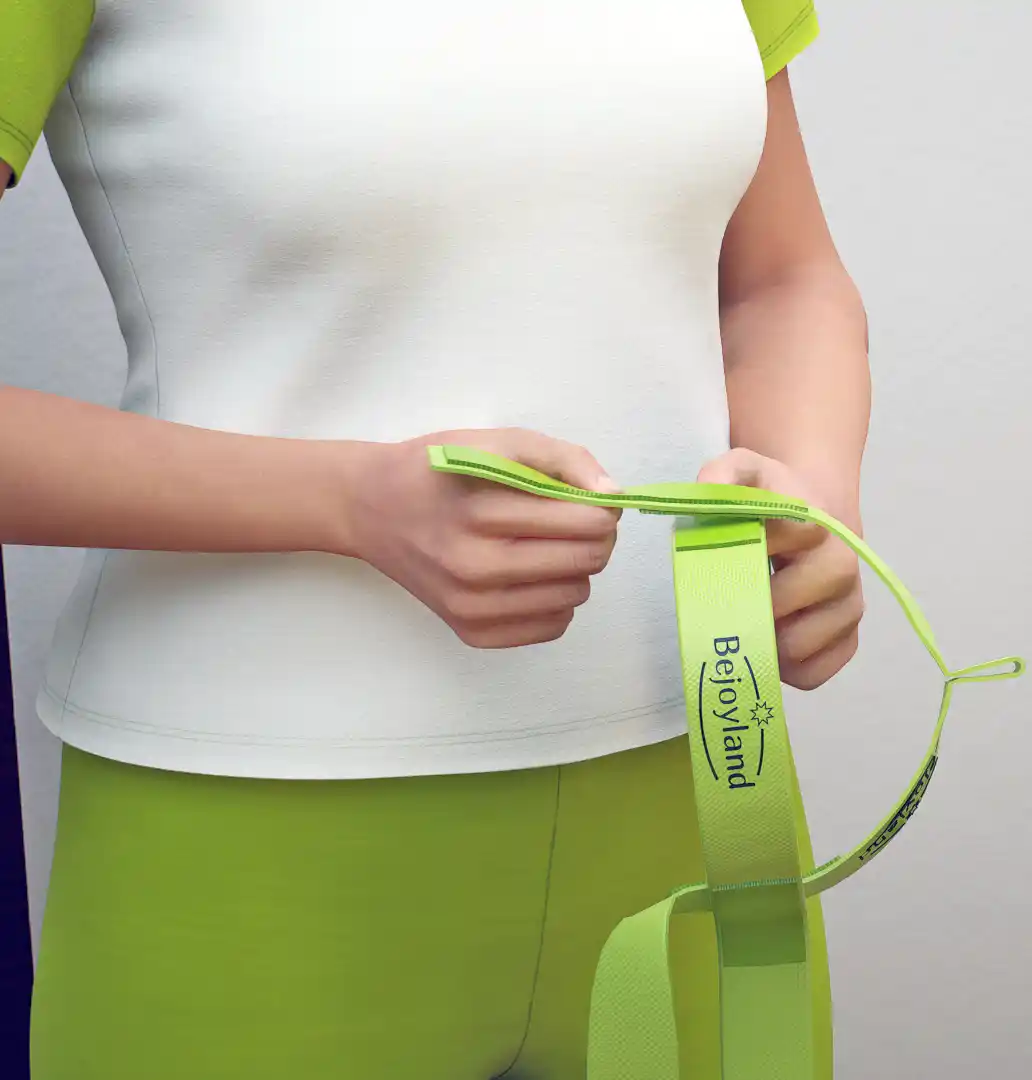
7. Headgear that adapts to any head shape
The patented headgear design conforms closely to heads of different sizes and shapes. Wear it once after purchase and adjust the hook-and-loop straps to the position that fits you; after that, putting it on before a session is just fastening the strap under your chin.
8. Packs down to about a third of a pound
No other neck trainer packs down this small. That matters because luggage space is always at a premium. Everything you need travels in the included drawstring pouch, at a total weight of roughly 1/3 lb. All you ever need on-site is an ordinary chair, which every mounting option uses, plus a door, and a room without one is rare, so a wall hook is rarely a requirement.
9. Reaches the deep neck muscles other trainers miss
Foundational cervical spine biomechanics research, measuring how much compressive load the passive spinal column alone can carry before buckling, is the basis for a widely cited estimate: roughly 80% of the cervical spine’s mechanical stability comes from the surrounding musculature, with passive structures like ligaments and discs contributing the rest, and deep neck muscles carry a large share of that muscular contribution.2 Because Bejoyland NECKY’s traction pulls upward along the spine’s axis, it can effectively engage those deep muscles and support more balanced activation patterns across the neck. Trainers that load the neck perpendicular to the spine tend to recruit the superficial muscles first, which can crowd out the deep-muscle engagement a perpendicular load makes harder to isolate.
10. Supports better posture over time
Axis-aligned traction and effective deep-muscle strengthening work together here: the same design choices covered above are what let Bejoyland NECKY support the restoration and maintenance of good posture, rather than working against it.
11. A full library of strengthening and stretching exercises
The included user guide covers 20 exercises for strengthening and static stretching of the neck and shoulder girdle. That’s before counting the PNF stretching sequences and the jaw-opening exercises that engage the platysma, demonstrated in the paid video guide, so 20+ is the more accurate number once the full library is in view.
12. Priced for what it actually is
Bejoyland NECKY is a high-tech product: rigid and elastic bands, a steel clip, and self-adhesive components, all tightly linked by physical properties and precise sizing. The goal from the start was to make it both highly effective and accessible, and the price reflects that: with all 12 advantages above built in, it’s priced lower than other neck-trainer models on the market.
Your neck is worth taking care of, and a well-trained one tends to show up in your mood and how you feel day to day, not just how you move.
Bejoyland NECKY, and the exercises built around it, are designed for general fitness, flexibility, and stiffness relief, not to diagnose, treat, or cure a medical condition. If you have a pre-existing cervical-spine condition, talk to a healthcare provider before starting a new training routine. If you’re still comparing trainer types before you decide, our guide to choosing a neck trainer walks through the main designs on the market. Ready to try it? See Bejoyland NECKY.
How do you get all 12 advantages in one neck trainer?
- Choose a trainer that pulls along the spine’s axis so compression doesn’t multiply.
- Use its upward traction for gentle decompression instead of added spinal load.
- Mount it on a door or a wall, whichever your space allows.
- Calibrate the resistance once, then train at a precise, repeatable 1-10 lb load.
- Keep your hands free so the shoulder girdle can move naturally.
- Add the most effective PNF-method stretching exercises to your training.
- Fit the headgear once, then strap in in seconds every session after.
- Pack it into a pouch that weighs about a third of a pound for travel.
- Target the deep neck muscles that carry most of the spine’s stability.
- Let the axis-aligned traction and deep-muscle work support your posture.
- Work through the 20+ exercise strengthening and stretching library.
- Get all of the above without paying for features you won’t use.
FAQ
Common questions about spinal compression, PNF stretching, and Bejoyland NECKY, answered below.
Does a neck trainer really compress your spine?
It can, depending on the direction the resistance pulls. When a trainer pulls the head sideways or forward, off the spine’s own axis, research measured the resulting compressive load at roughly 14 times the applied force. A trainer that pulls along the spine’s axis instead, like Bejoyland NECKY, avoids that multiplication.
What is PNF stretching, and can I do it with a resistance band?
PNF (contract-relax-antagonist-contract) stretching alternates a muscle contraction with a stretch, and it generally produces bigger range-of-motion gains than static stretching alone. It needs a way to control the resistance directly through each phase of the cycle, not a pull that’s fixed by your distance from an anchor point. Bejoyland NECKY makes that possible by letting you hold the band’s carabiner yourself and control the pull with your arm; on trainers where the pull is set by how far you’ve stepped from the anchor, there’s no equivalent direct control.
How is Bejoyland NECKY different from a passive neck-traction collar?
An inflatable traction collar is a passive device: you put it on, it pulls, and your muscles stay largely inactive. Bejoyland NECKY is an active resistance trainer, your neck muscles do the work against an adjustable elastic band, which is what builds strength rather than just relieving load for the duration you’re wearing it.
Is Bejoyland NECKY a good Iron Neck alternative?
If you’re looking for an Iron Neck alternative, the difference comes down to direction of pull. Iron Neck’s halo is built to apply resistance from any angle around the head, a 360-degree, multi-directional system designed for training the neck through every plane of motion. Bejoyland NECKY takes a narrower approach on purpose: its traction runs along the cervical spine’s own axis, which is what avoids the compression multiplication described above. If axial resistance without that tradeoff is the priority, NECKY fits; if true all-plane, 360-degree resistance is what you’re after, that’s specifically what a halo-style design like Iron Neck’s is built for.
How much does the Bejoyland NECKY neck trainer cost?
Bejoyland NECKY is priced lower than other neck-trainer models on the market, despite the patented mechanics behind its adjustable resistance and headgear. See the product page for current pricing.
Can I use Bejoyland NECKY if I have a pre-existing neck condition?<
Bejoyland NECKY is a fitness tool, not a medical device, and it isn’t designed to diagnose, treat, or cure any condition. If you have a pre-existing cervical-spine condition, talk to a healthcare provider or physical therapist before starting a training program.
Sources
- Cheng CH, Chien A, Hsu WL, Chen CP, Cheng HY. Investigation of the Differential Contributions of Superficial and Deep Muscles on Cervical Spinal Loads with Changing Head Postures. PLoS One, 2016. PMC.
- Panjabi MM, Cholewicki J, Nibu K, Grauer JN, Babat LB, Dvorak J. Critical load of the human cervical spine: an in vitro experimental study. Clinical Biomechanics, 1998. PubMed.